Chinese President visit

Prime Minister Muhammad Nawaz Sharif hand shake with Chinese President.

Democracy WINS - Pakistan WINS!

Wall street Journal news about democratic Pakistan

PCEC map

This is the original and only map of PCEC.

Mass Transit Bus Projects

Rawalpindi Metro Project

PM meets King Salman

Pakitan stands beside Saudia for its soverignity

Reduction in fares of public transport

Toll free helpline for compaints

Parliament Gallery

Group Photo| Speaker NA Sardar Ayaz Sadiq with Dr. Cyrill Nunn, Ambassador of Germany and Members of Pakistan-Germany Parliamentary Friendship Group

News reel

Followers

Showing posts with label Good governance. Show all posts

Monday, December 21, 2015

Ch Nisar in action | 2 dismissed ,foreigner deported on violating rules and regulations

http://www.dailywaqt.com/12-21-2015/images/528.gif


Monday, August 17, 2015

Putting railways back on track in Pakistan

Putting railways back on track in Pakistan

The latest statistics from Pakistan Railways paint a disappointing picture. Down from a 100 million passengers, Pakistan Railways carried a mere 47 million passengers in the 2013-14 fiscal year. —AFP
Thinking fast and slow is what Daniel Kahneman, the Nobel Laureate in Economics, thinks humans do. Planning fast and moving slow is what Pakistan Railways does.
With cumulative liabilities reaching 74 billion Rupees, Pakistan Railways is one state-owned enterprise that has not delivered a profit in ages. Despite when revenues increase, the expenses increase even faster, returning even bigger annual losses.
With such a dismal outlook, optimism still abounds at the Prime Minister’s Secretariat where plans for a high-speed rail link between Peshawar and Karachi have taken root.
One wonders when Pakistan has failed in running slow trains, how can it succeed in running fast ones. Wouldn’t planning fast and moving slow be yet another failed experiment with Pakistan Railways?
In April 2014, Pakistan Railways took out a half-page advertisement in The Financial Times soliciting interest in a high-speed rail link. The Sunday Timesreported the 6.6 billion pound project would reduce the travel time for the 700-mile journey from 18 to seven hours. The cost may seem high. However, at $10 million per km, it appears comparable to other similar projects in developing countries.
Source: http://www.railway-technical.com/finance.shtml.
High-speed rails in Pakistan are not going to be as fast as the French TGV or the Japanese Shinkansen, which operate at speeds over 300 km/h. A conservative estimate of the average operating speed for the high-speed rail in Pakistan is between 150 to 200 km/h.
It may not sound impressive, but this is the average operating train speeds in Canada and the US. If the trains in Pakistan can run at 150 km/h, train riders will be as fast and furious as their North American counterparts.
However, it is important to have a look at how Pakistan Railways veered off-track.
The bad ways of Railways
Nisar Ahmed Abro, a Station in-charge in Sindh, knows intimately well of what ails Pakistan Railways. Speaking to The New York Times in 2013, Mr. Abro quipped: “The railways are the true image of our country. If you want to see Pakistan, see its railways.” Mr. Abro has made the right prognosis. There is nothing more wrong with the Railways than what is already wrong with Pakistan and its other public sector utilities.
Corruption, mismanagement, nepotism, and lack of professional expertise plague the Railways and other relics of a fast shrinking public sector in Pakistan.
It is important to understand that Pakistan Railways is dying a slow death. In the process, its assets are shrinking and so is the level and scope of services the Railway provides.
In 1986, the consulting arm of the Canadian Pacific Railways won a contract to propose specifications for a computerised management information system. The Globe and Mail in Canada highlighted the deal and reported that Pakistan Railways operated 8,800 km of track and carried 11 million tonnes of freight and 100 million passengers.
That was then.
The latest statistics from Pakistan Railways paint a disappointing picture. Down from a 100 million passengers, Pakistan Railways carried a mere 47 million passengers in the 2013-14 fiscal year. From 11 million tonnes of freight in 1986, the volume was down to 1.6 million tonnes. Despite the drastic decline in services, Railways still carried a workforce of 80,000 employees.
The Railways finally got around to computerising parts of its information management in November 2007 when the electronic ticketing system was launched. Recall, Canadians were awarded a contract in 1986 to do its feasibility. It took Railways only 21 years to take the next step. However, the system remained operational for a mere three months! It was back to the good old days and the good old ways for Railways.
Railways infrastructure is insufficient to meet the demand and is in poor state. To help move a nation of 180 million, Pakistan Railways has fewer than 500 locomotives of which only 20 per cent are operational. The rest are either too old or too damaged to operate.
Railways’ own records show that even in the early 80s, the locomotive fleet stood at over 950 and the number of passenger coaches exceeded 2,370. By 2013-14, Railways was left with only 1,434 coaches. Also, Railways in the early 80s loaded, on average, 600,000 freight wagons. By 2013-14, that number was down to 76,300.
It is quite convenient to blame the political administration and bureaucrats for the sorry state of Railways’ affairs. This, however, will be wrong. The very masses, who suffer at the hands of Railways, seldom miss an opportunity to destroy the very infrastructure that they desperately need and have paid for with their taxes.
After the death of Benazir Bhutto, enraged masses torched 137 coaches and 22 locomotives. In addition, terrorist violence and accidents have destroyed even more infrastructure.
The state of Railways affairs is so bad that one cannot tell with certainty the extent of financial losses. At the same time, the political operatives are keen to deliver the good news about the Railways.
Last July, a senior administrator boasted to the media of generating 25 billion Rupees in revenue in 2013-14, resulting in an “increase of Rs 7 billion in the national kitty,” wrote a newspaper.
There is, however, a problem. The Auditor General of Pakistan (AGP) is not equally enthralled about the Railways’ performance. The AGP’s annual report raises alarm about the Railways’ losses surging to 32.5 billion Rupees for the same fiscal year.
The AGP reported the gross earnings to be 22.8, and not 25, billion Rupees against 55.3 billion Rupees in operating working expenditure. It is true that Railways earned more in 2013-14 than it did in 2012-13. However, its expenses rose as well, negating the benefits of increased revenues.
The looming losses did not deter the government from boasting to the IMF of a stellar Railways performance. In a letter of intent addressed to the IMF’s managing director, the government claimed to have improved Railways’ “revenue in FY 2013/14 by 32 per cent.” Never mind, Railways own published statistics reveal a 26 per cent increase in revenue over the last fiscal year.
The government further claims to have “increased revenue by over 50 per cent in the first nine months of FY 2014/15.” There is no mention in the letter of the mounting expenditures against the increased revenues.
How to put railways back on track
Given the culture of entitlement that lets college students ride public transit free or political patronage that keeps adding unneeded employees to the Railways’ bloated workforce, it is rather naïve to hope for a turnaround in Pakistan Railways with structural reforms.
The skills needed to revitalise a restructured Railways do not exist with the employees or the administrators.
There is no option, but to privatise Pakistan Railways. The inevitable privatisation can only be delayed, but not avoided. The downside of the delay is that vested interests will be able to scavenge even more Railways assets.
Remember, Railways today is merely a shadow of what it once was. Its land holdings, operating fleet of locomotives and cars has shrunk. It carries much fewer passengers and freight today than it did even two decades ago.
The attempts to privatise Railways always end up in the Superior Courts where Railways employees argue for their God-given right to a public sector employment. The Superior Courts must consider the balance between the welfare of the 180-million individuals against the employment guarantee for the 80,000 Pakistan Railway employees who are responsible for an increase of billions of Rupees each year to the nation’s collective debt.
Courts have also shown concern for low-income commuters who may be forced to pay higher fares under privatised rail operations. This indeed, is a valid concern.
However, it does not require the State to run Railways. The Benazir Income Support Programme is a good example of subsiding low-income households that could be expanded to include commuting subsidies so that the government is freed from running trains, flying planes, and steering buses.
In the interim, when the battle to privatise Railways continues, one can restructure Railways to slow down, if not reverse, the rot.
The breakdown of expenses reveals that Railways spends a large sum on maintenance and administration. This can be addressed by segmenting the Railways into smaller functional units with transparent administrative setups.
For instance, the passenger and freight operations may be segregated into independent entities, namely Pakistan Passenger Railways and Pakistan Freight Railways. The locomotives may be divided as per the current demand for service for freight and passenger transportation. The passenger cars and freight wagons are easy to assign. The maintenance departments should be consolidated under a separate independent entity that would serve both Freight and Passenger Railways.
Source: Data retrieved from Pakistan Railways annual report.
The government has already established Real Estate Development & Marketing Company (REDMCO) to manage and exploit the potential of whatever is left of the Railways public lands.
I recommend that the existing railway tracks, the accompanying rights-of-way, and other immobile assets, including Stations be consolidated under REDMCO with the goal for the entity to be an asset manager rather than one with the sole mandate to dispose of land to speculators.
Even with privatisation, it may be prudent to maintain railway stations and tracks under the public sector to allow late entrants from the private sector to make competitive bids for the use of the same infrastructure.
If the tracks, rights-of-way, and stations are privatised, they will result in new private sector monopolies who will have little incentive to be efficient or cost effective.
Think of the tracks as Motorways. Imagine if the Motorways were sold to Daewoo, who could have refused to allow competition to operate buses and trucks. Operating efficiencies would have declined and user costs increased as a result.
A good starting point towards privatisation will be to abolish the Ministry of Railways. Railway ministries do not exist in developed countries. Even in European countries where rail transportation is much more pronounced, railways are not a standalone ministry. By abolishing the Ministry of Railways, one can eliminate the administrative redundancy that exists between the Ministry and Pakistan Railways.
A Ministry of Transportation and Infrastructure should amalgamate the collective portfolios of Ministry of Railways, Ministry of Ports and Shipping, and Ministry of Housing and Works. This will not only save costs but also improve operating efficiencies by ensuring better coordination between inter-related departments and corporations that are spread across several ministries. Pakistan Railways and PIA could both be under the Ministry of Transportation and Infrastructure until such time that these entities are privatised.
Railways should also be forced to abandon all tangential operations that are not core to its mission. For its employees and their dependents, Railways run numerous hospitals and schools. These are the non-productive use of Railways’ capital and other assets/infrastructure.
These facilities should be handed over (better sold) to respective municipal and provincial authorities. Instead of operating these large establishments at a financial loss, Railways should instead provide health insurance to its employees and education grants to low-income employees. The trade-off will result in savings and, more importantly, it will help the Railways to focus more on its core mission.
Doing the same without success for years and hoping for a better outcome in the future is a clear sign of administrative and imaginative failure. Whatever the State has done, under a variety of civilian and military regimes, it has failed to stop bleeding at Pakistan Railways.
A gradual and sustained series of steps, starting with restructuring and ending with privatisation, are a must.
If not, be prepared to assume billions more in national debt to keep the 80,000 Railway employees working in the public sector.


Wednesday, May 20, 2015

Railway decay seems reversing

 Railway decay seems reversing

 NASEER AHMAD
KARACHI: “If you find a train arriving late, set your watch right,” remarked a smart young porter hurrying down the platform overloaded with several pieces of a passenger’s luggage. “Trains don’t arrive late these days!”
I recently set off from Rawalpindi by Tezgam for Karachi. Exactly at 8.30am it whistled and after a few seconds a second whistle blew and the train began to chug. A relative texted me the train’s travel timetable. All along I checked it with the train’s arrival at the various stations, and everywhere it was ahead of schedule. I got suspicious of the genuineness of the timetable. At Multan I asked a vendor how long the train would stop over there. “It will be here for half an hour, sir. Don’t worry,” he said and added with a justified sense of elation: “It arrived here ahead of time by 15 minutes.”
When the train pulled in at Karachi’s Landhi station, it was around an hour earlier.
Trains arrival and departure has always been a serious issue. Throughout the several decades a train arriving on time was an anomaly. If a train arrived within a few hours of its due time, people were content with it. The perennial delay was blamed on the driver’s greed for overtime which he purportedly earned at the cost of the passengers’ precious time. That could be true or may not be so, but train delays had been a common phenomenon in the past. But following the assassination of Benazir Bhutto in December 2007, the destruction of numerous train bogies and locomotives made the railways go haywire. It never recovered from that unfortunate episode till the last government lasted. Former railway minister Haji Ghulam Ahmed Bilour himself was so pessimistic about the railways’ future that he declared that the system was doomed and he could not help revive it.
Critics started alleging that since the minister had his own transport business, he was deliberately trying to ruin the railways.
Anyway, trains were late, sometimes by days not just hours. In one such unfortunate episode a train reached from Karachi to Rawalpindi in almost a week instead of the 26-hour journey. People waiting at railway stations were often told that the train was on its way from the other end, it would arrive here after so many hours delay, then it would be rolled to the washing yard before it arrived on the platform to pick passengers. The causes mentioned for the inordinate delays were various, from fuel shortages to engine breakdowns and non-availability of spare locomotives. This forced many regular passengers to opt for other modes of travel, particularly buses, which have since flourished, offering fantastic facilities and luxuries –– free cold drinks and snacks presented by women attendants, working air conditioning, films etc. But that trend appears to be reversing now with trains getting back on the track.
The prime minister’s inauguration of a new train, called Greenline train, on Friday may be proof of it. Railway officials claim that the train is not only centrally air-conditioned, it offers “WiFi connection throughout the route, three-time quality meal, tea, mineral water, newspaper and standard bedding” to the passengers during the travel between Islamabad and Karachi.
Timing is not the only area where the trains have shown some improvement. Water supply and sanitation have also markedly become better than before. The trains are swept at least once during the journey.
During the last few months the steadily rising fares seems to have been reversed. For instance, earlier an AC sleeper ticket between Karachi and Rawalpindi cost Rs6,300; now it is for Rs4,700. Similarly, at the station, coolies roam about offering their services to whoever wants them. Their role has changed considerably from that of an agent of corrupt officials who sold tickets in black market through these men in red shirts and white shalwars. Now they only help passengers with their luggage and comfortably lodge them in their already reserved seats. Black-marketing of tickets is uncommon now. Even the porters are supposed to charge official rates for carrying luggage pieces, though most passengers are unaware of or do not care much about it and just bargain with them.
The trains are comfortable with mostly having bogies imported from China, punctual and in some cases luxury too. Yes, what is called AC sleeper has various compartments for four, three and even two passengers.
Most people credit the present government for the turnaround. “Minister Saad Rafiq really deserves commendation for this improvement,” said Iftikhar Hussain, an employee of the Sui gas company, who says he cannot afford to travel by air and cannot sit for long hours in a bus either.
“Credit for this goes to the PTI. If it were not for Imran Khan’s sit-ins, this government wouldn’t have done anything for the public during its first four years,” said Mohammad Tufail, a PTI supporter.
Whether the credit goes to Minister Saad Rafique, the PTI’s dharnas or the changed internal and external circumstances, China’s assistance, passengers don’t care. They want a dependable, comfortable and affordable mode of travel and they seem to be getting it. With Greenline train on the tracks, I’m looking forward to enjoying a trip to the capital and back with the promised cool VIP treatment on it.
The government’s enthusiasm shows that the privitisation process set in motion with Business Train and Shalimar Express is not in favour of the people. Privatisation is just adding to their woes with higher fares. And they have no economy class, only which most Pakistanis can afford.
Published in Dawn, May 19th, 2015


Saturday, November 1, 2014

Improvement in PIA

PIA has cut losses of Rs13.5bn this year: aviation adviser

ISLAMABAD: Adviser to Prime Minister on Aviation Affairs Shujaat Azeem said on Friday that the annual loss of Pakistan International Airline (PIA) had been reduced to Rs18 billion from Rs31.5 billion during the previous year.

He said the PIA was also paying Rs3.29 billion interest on legacy loans that were taken in 1992.
Speaking to reporters in the federal capital, the premier's adviser said that 10 more narrow-body airbuses and five aircraft manufactured by French-Italian manufacturer ATR would be inducted in PIA by the end of December this year.
Induction of more aircraft would help boost PIA's performance which would assist in generating more revenue, Azeem said.
Praising the initiatives for the improvement of the national carrier, he said the government was working towards introducing a new aviation policy to discourage corruption within PIA.
PIA had received delivery of its eight A-320 aircraft acquired on long-term dry lease from General Electric, Azeem added.
He also said that the PIA has 25 operational airbuses and 11 ATR aircraft at present and increasing the number would also help overcome its financial difficulties.


Wednesday, October 22, 2014

PILDAT SURVEY | Governance in Punjab is better than KP


http://e.jang.com.pk/10-22-2014/pindi/pic.asp?picname=521.gif

Tuesday, October 21, 2014

Video |

Hajj arrangements by PMLN government

Alhamdullilah nation is free of hajj scandals and those who looted the money of hujaj karam. PMLN minister Sardar Muhammad Yousaf has worked day and night for the betterment of hajj procedure.


Monday, September 8, 2014

Column

Shobaz Sharif | Muhammad Bilal Ghauri


This column was published in Daily Jang dated 08 Sept. 2014.


Wednesday, June 25, 2014

PML-N Government's One Year of Performance

National Agenda | Delivering real CHANGE

radio 


Wednesday, February 5, 2014

M Governance | Police Verfiication system

Police verification system


News report published in Daily Waqt dated February 05, 2014

Sunday, January 12, 2014

PMLN saved PSO from going Bank default

PMLN saved PSO from default


News report published in Weekly Nidai Milat dated January 02, 2014


Saturday, January 11, 2014

Danish School Authority | Audit rules and regulations chalked out

Danish School Authority | Audit rules and regulations chalked out 


http://www.dailywaqt.com/01-11-2014/images/03_07.gif


Tuesday, December 3, 2013

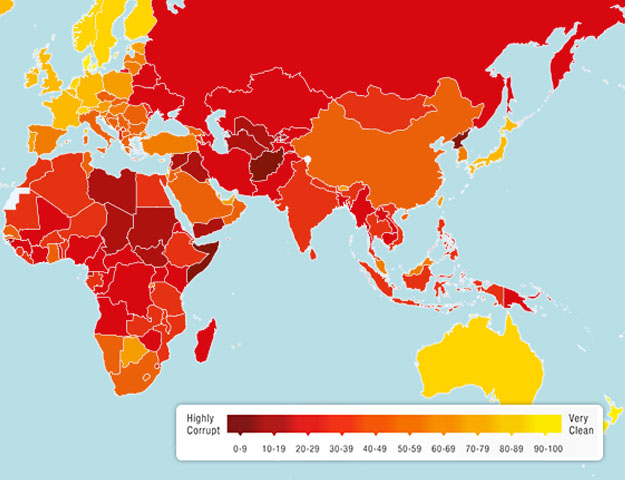
#GoodGovernance | Pakistan's Global Ranking Improved

Corruption index: Pakistan's global ranking improves by 12 spots

Published: December 3, 2013
Recent survey by Transparency International reveals Pakistan has become less corrupt in 2013 as compared to 2012. PHOTO: FILE
BERLIN: While the government is regularly accused of corruption, a recent survey by Transparency International revealed on Tuesday that Pakistan is deemed to be less corrupt in 2013 as compared to 2012.
Pakistan has improved its ranking by 12 places in the Corruption Perceptions Index 2013 since last year. The country now has 48 countries behind it in the corruption index against only 35 in 2012.
Pakistan, which was ranked 127 on the scale of 1 – 175 this year, has witnessed irregular decrease in corruption in the last five years. Pakistan was ranked 139 in 2009, 143 in 2010, 134 in 2011 and 139 in 2012.
The study by the graft watchdog declared Afghanistan, North Korea and Somalia as the world’s most corrupt countries while Denmark and New Zealand came out as nearly squeaky-clean.
Corruption 
Worldwide, almost 70 percent of nations are thought to have a “serious problem” with public servants on the take, and none of the 177 countries surveyed this year got a perfect score, said the Berlin-based non-profit group.
Transparency International’s annual list is the most widely used indicator of sleaze in political parties, police, justice systems and civil services, a scourge which undermines development and the fight against poverty.
“Corruption hurts the poor most,” lead researcher Finn Heinrich told AFP.
“That’s what you see when you look at the countries at the bottom. Within those countries, it’s also poor people who get hurt the most. These countries will never get out of the poverty trap if they don’t tackle corruption.”
Highs and lows
Among countries that have slipped the most on the group’s 2013 Corruption Perceptions Index are war-torn Syria as well as Libya and Mali, which have also faced major military conflict in recent years.
“Corruption is very much linked to countries that fall apart, as you see in Libya, Syria, two of the countries that deteriorated the most,” said Heinrich.
“If you look at the bottom of the list, we also have Somalia there. These are not countries where the government is functioning effectively, and people have to take all means in order to get by, to get services, to get food, to survive.”
Heinrich said Afghanistan, where most Nato-led Western forces are pulling out next year after a more than decade long deployment, is “a sobering story. We have not seen tangible improvements”.
“The West has not only invested in security but also in trying to establish the rule of law. But there have been surveys in the last couple of years showing the share of people paying bribes is still one of the highest in the world.”
Also at the bottom of the list is North Korea, “an absolutely closed totalitarian society”, said Heinrich, where defectors report that famine is worsening corruption “because you have to know someone in the party who is corrupt in order to even survive”.
Among the “most improved” countries, although from a low base, was Myanmar, where a former military junta has opened the door to the democratic process and, facing an investment boom, has formally committed to transparency and accountability rules.
“That’s the only way countries can avoid the ‘resource curse’, where the resources are only available to a very small elite,” said Heinrich. “Nigeria and other oil-rich countries are obviously very good examples.”
Huguette Labelle, chair of Transparency, said “all countries still face the threat of corruption at all levels of government, from the issuing of local permits to the enforcement of laws and regulations”.
Method
The group says that because corruption is illegal and secretive, it cannot be meaningfully measured.
Instead Transparency collates expert views on the problem from bodies such as the World Bank, African Development Bank, Economist Intelligence Unit, Bertelsmann Foundation, Freedom House and other groups.
It then ranks countries on a scale of 0-100, where 0 means a country’s public sector is considered highly corrupt and 100 means its is regarded as very clean.
Results
The latest survey “paints a worrying picture”, said Transparency. “While a handful perform well, not one single country gets a perfect score. More than two-thirds score less than 50.”
 
The bottom-ranked countries, scoring 10 to 19, included Iraq, Syria, Libya, Sudan and South Sudan, Chad, Equatorial Guinea, Guinea-Bissau, Haiti, Turkmenistan, Uzbekistan and Yemen.
At the top, between 80 and 89, aside from Denmark and New Zealand, were Luxembourg, Canada, Australia, the Netherlands, Switzerland, Singapore, Norway, Sweden and Finland.
“The top performers clearly reveal how transparency supports accountability and can stop corruption,” said Labelle.
“Still, the better performers face issues like state capture, campaign finance and the oversight of big public contracts which remain major corruption risks.”